
Planning your trip
Paquimé (Casas Grandes) and Mata Ortiz: Visiting the Ruins and the Potters' Village
Paquimé's adobe ruins and the potters of Mata Ortiz: hours, fees, road times from Chihuahua and El Paso, weather, safety advisories and a printable plan.
Saved on this device: you can read this guide without signal.
Email me this guide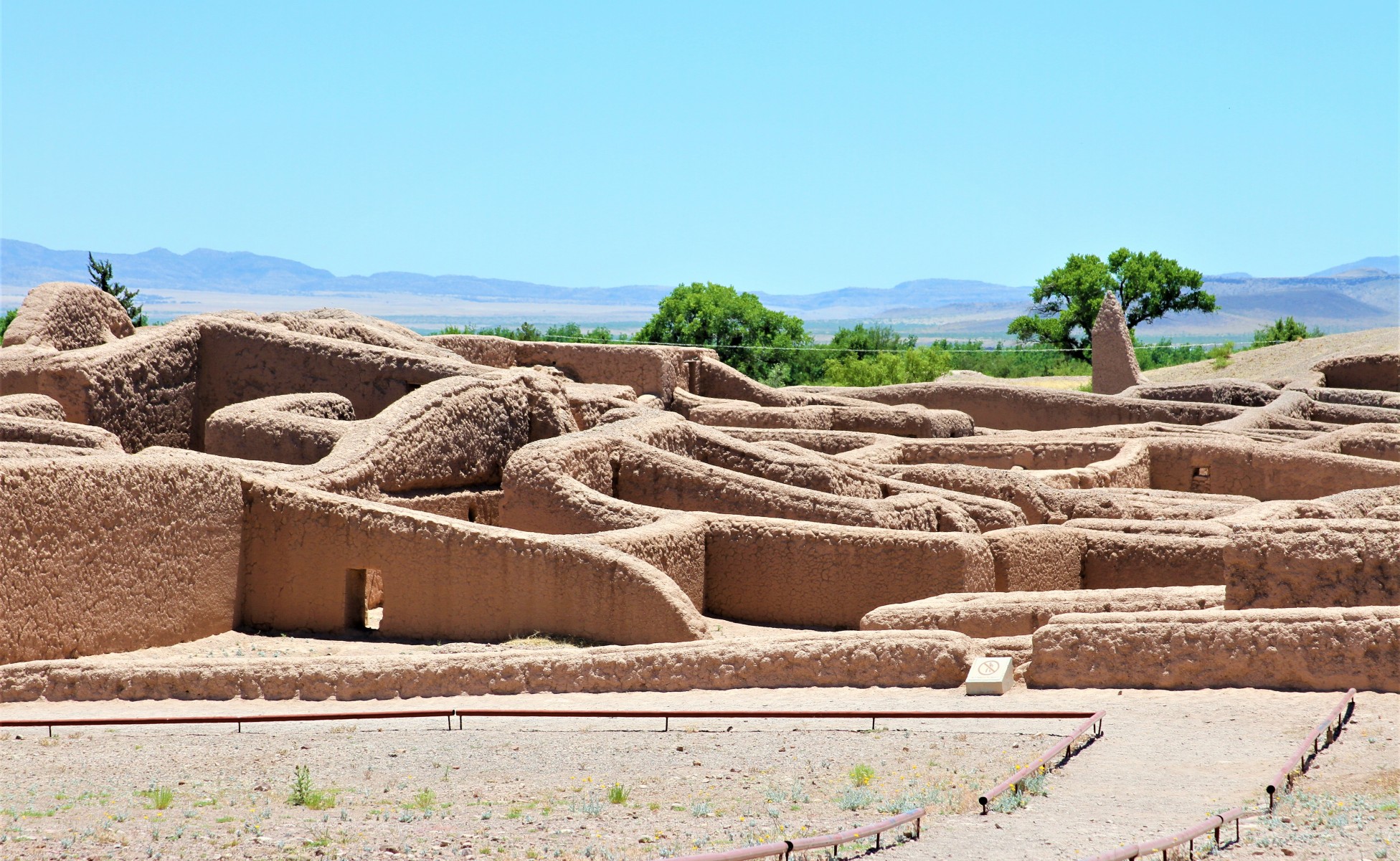
An adobe city that traded with Mesoamerica and the American Southwest, and the village 29 km 18 mi away where potters brought its ceramics back to life.
Key facts
| What it is | The ruins of Paquimé, a pre-Hispanic earthen city and UNESCO World Heritage site since 1998, with the Museum of the Cultures of the North beside it; and Mata Ortiz, a village of potters to the south |
| Where | On the edge of the town of Casas Grandes, northwestern Chihuahua; Nuevo Casas Grandes, the nearest city with hotels, is 8.5 km 5 mi away by road |
| Road distance | From Chihuahua city: 296 km 184 mi, about 4 h 15 min · from the El Paso–Ciudad Juárez border: 290 km 180 mi, about 4 h 15 min |
| Opening hours | Tuesday to Sunday, 9:00 to 17:00; last entry 16:00; closed on Mondays |
| Entry fee | MXN 210 for foreign visitors, MXN 105 for Mexican nationals; one ticket covers the archaeological site and the museum |
| Mata Ortiz | 29 km 18 mi by road from Paquimé, about 40 minutes; more than 450 potters live and work there |
| Time to allow | Our suggestion: 2 to 3 hours for the site and museum, and half a day for Mata Ortiz; two days if you drive from Chihuahua or the border |
| Best season | Mild days in March–May and October–November; most of the rain falls in July and August; average lows below freezing in December and January |
| Altitude | About 1,460 m 4,790 ft |
| Guided option | A day trip from Chihuahua city with hotel pickup, museum and site visit, a pottery demonstration and lunch in Mata Ortiz |
| Safety | The U.S. lists the state of Chihuahua at Level 3, Reconsider travel; the UK and Canada advise against non-essential travel to this part of the state (details below) |
Paquimé is the largest archaeological zone of the Chihuahuan Desert: a maze of rammed-earth walls, T-shaped doorways and ceremonial mounds, with a museum that holds the pottery, shell and copper its people traded. Mata Ortiz, a short drive south, is where that pottery tradition was revived in the 1970s, and where you can watch it being made today.
If you would rather not drive, the Paquimé & Mata Ortiz Day Trip on Civitatis picks you up at your hotel in Chihuahua city, with a guide who speaks English and Spanish. We explain below what it includes and why you should expect a very long day.
Why Paquimé matters
Paquimé sits at the foot of the Sierra Madre Occidental, near the headwaters of the Casas Grandes River, in a desert valley watered by the Casas Grandes, Santa María and El Carmen rivers. Its story runs for close to nine centuries:
| Period | What happened |
|---|---|
| Around AD 600 | The first villages of trench houses, half sunk in the ground and roofed with branches and mud, appear near natural springs along the rivers |
| Around 900 | Those villages are abandoned and replaced by buildings with walls of earth; the first multi-family houses have inner courtyards used as living areas and workshops |
| Around 1200 | Irrigated farming brings wealth, and building begins on a city of large family compounds three and four stories high, with storerooms, workshops, temples, market squares, ball courts and a water system of wells and canals |
| 14th and 15th centuries | The city's peak; more than 3,000 people are estimated to have lived here |
| Before the Spanish arrived | The city is abandoned; the Spanish find it empty |
| 1566 | The Spanish expedition of Francisco de Ibarra describes buildings of up to seven stories |
| 1956–1962 | Archaeologist Charles Di Peso excavates two-thirds of the houses |
| 1992 | A presidential decree creates the protected archaeological zone, with a buffer zone between it and the town |
| 1998 | Paquimé is inscribed on the UNESCO World Heritage list |
| 2015 | It is added to UNESCO's register of enhanced protection, with eight other Mexican archaeological zones |
The World Heritage listing dates the site's development to the years 700 to 1475 and recognizes two things: Paquimé is exceptional evidence of trade and cultural links between the Pueblo peoples of what is now the southwestern United States and northern Mexico and the civilizations of Mesoamerica, and it shows the development of adobe architecture in North America blended with techniques from central Mexico. The protected property covers about 146 hectares (361 acres), and much of it has never been excavated: an estimated 2,000 rooms survive, only part of them uncovered. The language and ethnic identity of the people who built it are still unknown.
The trade went in every direction. Macaws came from the south, turquoise and copper objects from the north, salt from the Samalayuca desert and shell from the Pacific coast. Paquimé sent back luxury goods: polychrome pottery, human-shaped vessels and figurines, turquoise and copper pieces and raw clay. About 24 tonnes of archaeological material were recovered here, from shell, turquoise, copper and feathers to textiles, musical instruments, macaw and turkey remains, burials and offerings.
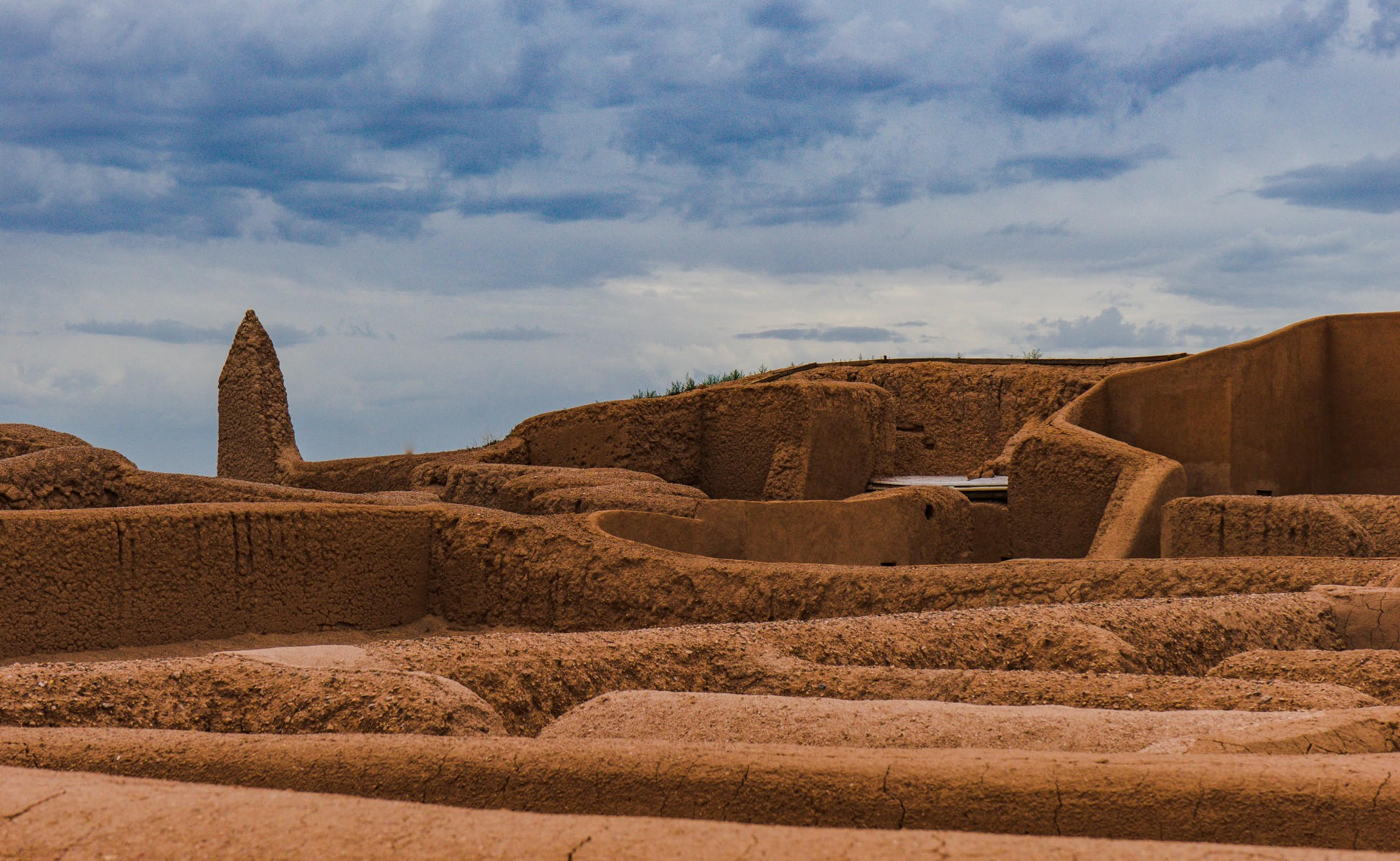
Mesoamerica shows in the ceremonial mounds and in the ball game, a symbol of fertility like the serpent and the macaw. The desert shows in the earth itself: the walls were raised by packing damp earth into wooden forms, a little like pouring concrete today.
What you see at the archaeological site
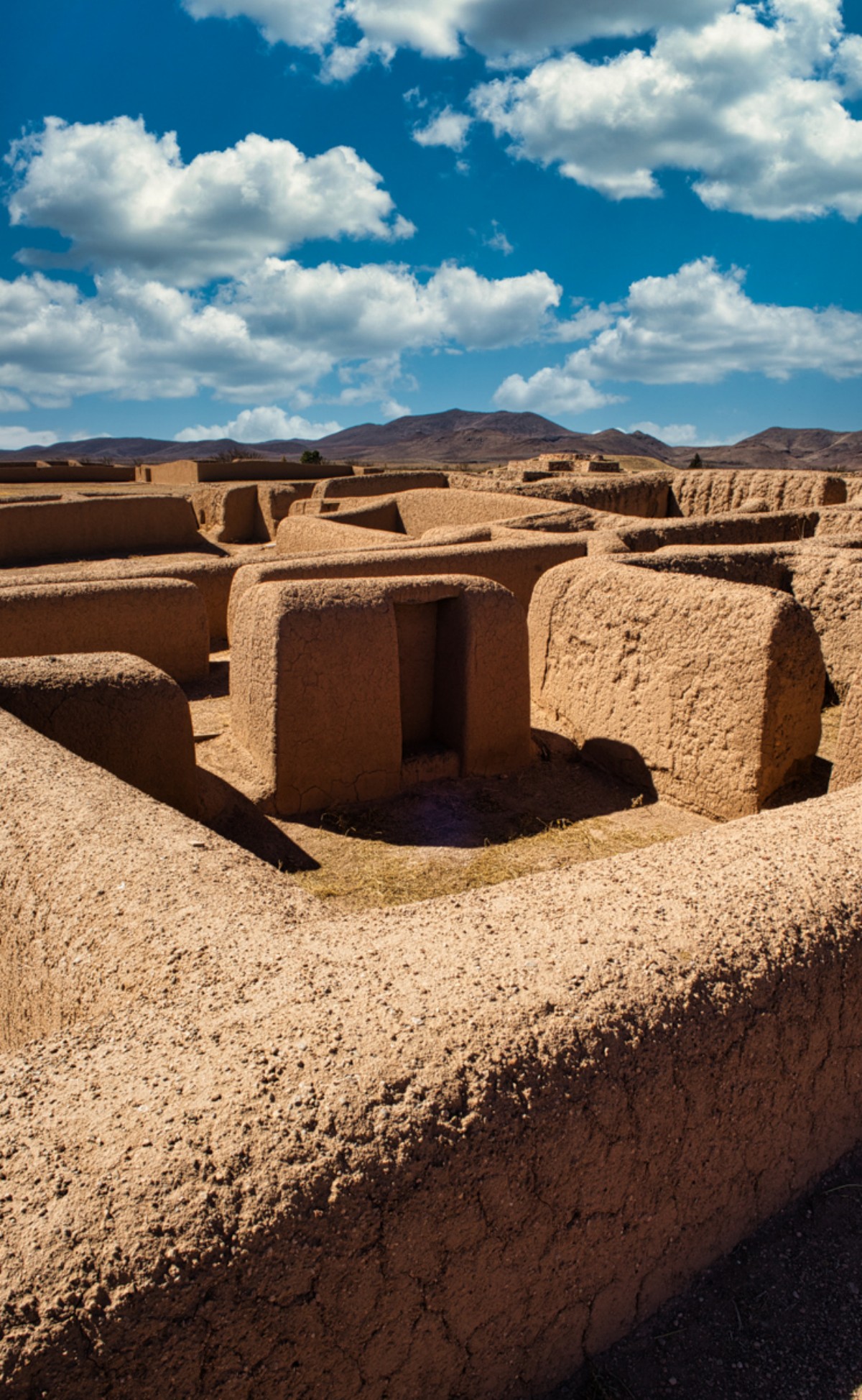
The visit is a walk among low earthen walls, mounds and courtyards rather than a climb up pyramids. These are the main structures to look for:
- Mound of the Heroes. A mound with a stuccoed stone face almost 4 m 13 ft high, in front of the market area. A layer of ash on its top suggests a structure or tower that may have signaled to a watchtower on Moctezuma hill. Its outline resembles a headless bird; the name comes from much later, when soldiers who died in the battle of Casas Grandes in 1914 were buried in it.
- Mound of the Cross. A small cross-shaped mound at the north end of the city, with round platforms at its tips. It points north with a deviation of eight degrees and was probably tied to key dates of the farming calendar.
- Walled House. Built in the Middle Period (about 1200–1300) and changed several times afterwards, a good example of how the city was rebuilt over more than 400 years.
The great houses
- House of the Columns. Courtyards and rooms that rose several floors, perhaps four or five; you can still see where floors and lofts met the walls. The tall, obelisk-like pillar known as El Pilarón is actually the corner of a multi-story building that survived better than the rest. On its south walls the construction method is easy to read: earth tamped into wooden forms, with no straw.
- House of the Macaws. A one-story compound next to the central plaza, probably home to the guild that bred macaws for their feathers. The nesting boxes where the birds were raised are still there.
- House of the Dead. Its rooms held many individual and group burials with offerings such as ceramic drums, and objects used in ceremonies with macaws; its residents are thought to have been healers.
- House of the Skulls. Named after a hanging mobile made of human skulls found in one of its rooms. It had 198 rooms and may have housed around 500 people.
Water, plaza and ball courts
- The water system. At the entrance, a settling tank filtered water into the main reservoir; a sluice then sent it through channels that ran across the living areas. Few things say more about this city than running water in the middle of the desert.
- Central Plaza, or Market Plaza. An open space surrounded by buildings for trade in regional goods: poultry, healing, crafts and precious stones, laid out so visitors could move through without disturbing the residents.
- Ball courts. Mesoamerican-style courts for the ritual ball game, one of the clearest signs of the city's ties to the south.
- Roasting pits. Large rock-lined pits thought to have been used to roast agave hearts are often mentioned in descriptions of Paquimé. We found no official description of them, so ask at the museum which ones are open to view.
Why the walls look new. Conservation here works by covering the original walls with a fresh "sacrificial" layer of the same earth, so that rain and wind wear away the new coat and not the ancient one. The heavy summer storms are the main threat to the site, which is why you may find maintenance under way.
Before you walk in. Food is not allowed into the zone, so eat before you go, and bring water, a hat and sunscreen: this is open desert, and June highs average 34 °C 93 °F.
The Museum of the Cultures of the North
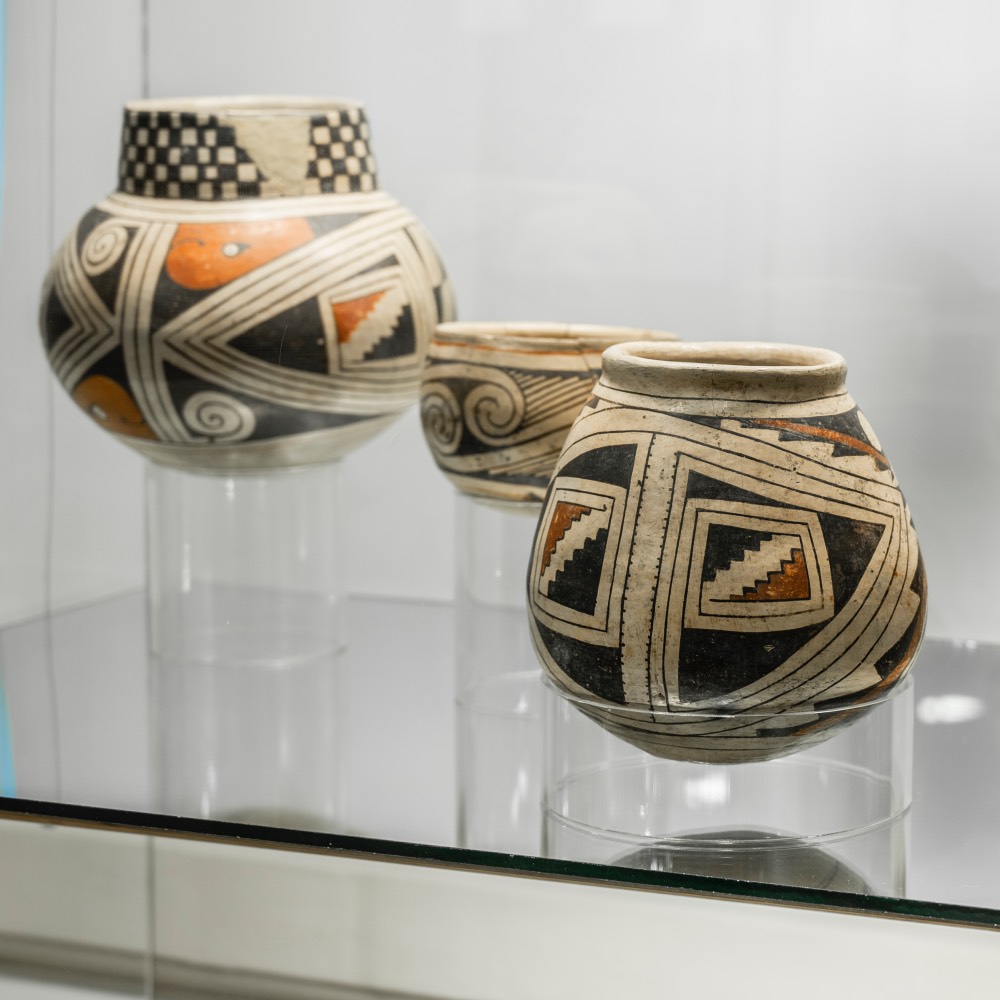
The Museo de las Culturas del Norte stands beside the ruins, in a semi-underground building that won a prize at an architecture biennial. It holds one of the finest archaeological collections in northern Mexico, recovered from the excavations: polychrome pottery, including vessels shaped like people and animals, wood, basketry, stone tools, semi-precious stones, textiles, luxury objects and human remains, together with scale models of the city and dioramas.
Our suggestion is to start here. Half an hour in the museum turns the walls outside into rooms, workshops and macaw pens, and it is the best way to understand the pottery before you see it being made in Mata Ortiz.
The museum offers guided tours (ask for one in advance), and has a shop, a snack bar, toilets, parking and an information desk. Flash photography is not allowed inside.
Hours, tickets and rules
| Days | Tuesday to Sunday; closed on Mondays |
| Hours | 9:00 to 17:00 for the site and the museum; last entry to the archaeological zone at 16:00 |
| Ticket | MXN 210 for foreign visitors, MXN 105 for Mexican nationals; it covers both the site and the museum |
| Free entry | Sundays for Mexican citizens; always free for Mexican children under 13, students and teachers, and senior citizens (these discounts are for Mexican nationals) |
| Cameras | Professional cameras and video cameras pay an extra fee |
| Not allowed | Food, smoking, pets, and flash inside the museum |
| Services | Parking, toilets, snack bar, shop and accessible facilities |
| Address | Calle Independencia 100, Zona de Monumentos Arqueológicos de Paquimé, Casas Grandes, Chihuahua; from the center of Casas Grandes, follow Calle Allende for 1 km |
| Phone | Museum: +52 636 692 8003 · INAH Chihuahua office: +52 614 410 8730 |
Carry pesos in cash. We found no official statement on card payment at the ticket office.
Mata Ortiz, the potters' village
Juan Mata Ortiz is a small village southwest of Casas Grandes, 29 km 18 mi by road from Paquimé. It began as a timber and railroad town: an American engineer, Frederick Stark Pearson, built a sawmill here that was billed as the largest in the world, and in 1925 the town took the name of Juan Mata Ortiz, a soldier who fought the Apache bands of the region. The old timber and railroad town found a new future in clay.
Today more than 450 potters live in Mata Ortiz, and within a radius of about 800 m (half a mile) you can meet artisans who have won national awards: the National Prize for Arts and Sciences in 1999, the National Youth Prize in 2010 and the National Ceramics Prize in 2013.
Juan Quezada and the revival
The revival began with Juan Quezada Celado, born on May 6, 1940, in Santa Bárbara Tutuaca, in the Belisario Domínguez municipality of Chihuahua. As a young man he found ancient pots and shards in the hills around Mata Ortiz and set out to reproduce them with no training in pottery, working out the clay, the pigments and the brushes by observation and trial. It took him about 15 years of experiments to recover a process that had been lost for some 600 years. Spencer MacCallum, an American who came across his work, promoted him in those early years.
Quezada shared what he learned, and the village changed from a farming community into an internationally known craft center. He received Mexico's National Prize for Arts and Sciences in Popular Arts and Traditions in 1999, recognition from the U.S. Congress, and in 2021 the state of Chihuahua's Gawí Tónara award for more than 60 years of work. He died on December 1, 2022. His legacy runs through the village: potters there usually specialize in one style, close to that of the person who taught them.
How a Mata Ortiz pot is made
What makes this pottery remarkable is that every step is done by hand, without a potter's wheel, from local materials:
- Clay. Local clays in white, yellow, orange, gray and red; some potters mix clays to get a marbled effect.
- Shaping. A flat disk of clay is set in a plaster mold, and the walls are built up with thick coils laid in rings. The walls are thinned with a piece of saw blade, then sanded once the piece is dry, until the pot is light but strong.
- Polishing. The surface is smoothed with sandpaper, a soft stone or a deer bone.
- Painting. Small marks divide the surface into two to five equal parts. Fine lines are painted with long brushes made from the hair of children aged 7 to 9, and the areas between them are filled with shorter brushes. Red comes from iron oxide and black from manganese, both found locally; some potters add commercial ceramic colors such as green, blue and yellow.
- Firing. Pots are set on a small grill or on the ground, covered with an upturned flowerpot or bucket, surrounded with cow dung or cottonwood bark and set on fire. For black pieces, the fuel goes inside the chamber and it is sealed so the smoke penetrates the clay. The metallic black-on-black style, painted over a coat of graphite, began as an accident.
Shapes range from large jars, bowls and platters to bottles, miniatures and effigies of people, birds and animals. Since the revival of the 1970s, the pieces have been made as art and decoration rather than for everyday use.
Visiting Mata Ortiz and buying pottery
Part of the pleasure of Mata Ortiz is buying a pot from the person who shaped, painted and fired it. A few practical notes:
- Go in daylight and allow at least a couple of hours; the road from Paquimé takes about 40 minutes each way.
- Ask before you photograph people or work in progress.
- Ask about the piece: who made it, what clay and colors, and how it was fired. The answer tells you more than any label.
- Prices vary widely with size, fineness of painting and the potter's reputation. We found no official price list, so we don't publish one; bring enough cash in pesos and ask how they pack pieces for travel.
- The pottery contest. A Mata Ortiz pottery competition is held around October 5 each year; confirm the date locally if you want to plan around it.
The guided day trip from Chihuahua includes a pottery demonstration and a traditional lunch in the village, which is the easiest way to see the process if you don't speak Spanish.
How to get there
There is no train to Paquimé. You arrive by road, either at the wheel, on a guided tour or by intercity bus to Nuevo Casas Grandes.
| Starting point | Road distance to Paquimé | Driving time (no stops) | Main roads | Notes |
|---|---|---|---|---|
| Chihuahua city | 296 km 184 mi | about 4 h 15 min | MEX 45D toll road north, then MEX 10 through Buenaventura | The route most visitors take; the guided tour starts here |
| Ciudad Juárez (Paso del Norte bridge, El Paso) | 290 km 180 mi | about 4 h 15 min | CHIH 174, MEX 2, MEX 10 | A border-to-interior drive; read the safety section first |
| Puerto Palomas (Columbus, New Mexico) | 193 km 120 mi | about 2 h 50 min | MEX 2, MEX 10 | The shortest drive from the U.S.; the U.S. port at Columbus is open 24 hours |
| Cuauhtémoc | 324 km 201 mi | about 5 h | CHIH 5, CHIH 15, MEX 10 | Combines with a visit to the Mennonite communities |
| Creel | 413 km 256 mi | about 6 h 40 min | CHIH 25, CHIH 15, MEX 10 | Not a day trip; plan it as a separate leg of your trip |
| Nuevo Casas Grandes | 8.5 km 5 mi | about 11 min | Local road | Where the hotels are |
| Paquimé to Mata Ortiz | 29 km 18 mi | about 40 min | CHIH 4 | From Nuevo Casas Grandes: 36 km 22 mi, about 45 min |
Times are pure driving at normal speeds; with stops for fuel, food and toll booths, add at least half an hour on the long legs.
From Chihuahua city. Take the toll road toward Ciudad Juárez. At kilometer 103, take the exit toward the town of Ricardo Flores Magón and continue on the road to Buenaventura and Nuevo Casas Grandes. From the historic center of Casas Grandes, follow Calle Allende for 1 km 0.6 mi to the archaeological zone.
From the United States. If you drive a U.S.-registered car beyond the border zone, you need a temporary vehicle import permit from Banjercito with a refundable deposit, an FMM entry permit for each traveler and Mexican liability insurance. Our guide to driving to Copper Canyon explains each step. At Columbus, take NM 11 south from Deming to the port of entry, 3 miles (5 km 3.1 mi) south of the village of Columbus. We found no official opening hours for the Mexican immigration and vehicle-permit offices at Puerto Palomas, so confirm them before you plan an early crossing.
By air. If you fly in to Chihuahua city or El Paso, you still have more than four hours on the road.
By bus. We found no official published timetable for buses from Chihuahua or Ciudad Juárez to Nuevo Casas Grandes, so we don't list one; ask at the bus station. From Nuevo Casas Grandes you will still need a taxi to Paquimé and, above all, to Mata Ortiz.
The guided day trip from Chihuahua
The Paquimé & Mata Ortiz Day Trip is the simplest way to see both places without driving:
| Starts from | Your hotel in Chihuahua city (pickup and drop-off included) |
| Duration listed | 8 hours |
| Includes | Transport by minibus or coach, a guide who speaks English and Spanish, entry to the Paquimé archaeological zone, and lunch |
| Program | Guided visit of the Museum of the Cultures of the North and the ruins; a pottery demonstration in Mata Ortiz; a traditional meal at a restaurant in the village |
| Price | From about US$281 per person; prices change, so check the listing |
| Cancellation | Free up to 24 hours before the start |
| Not suitable for | Wheelchair users; children under 3; pets |
| Booking | Possible up to 1 day ahead if seats remain |
Read the duration with care. By our road calculation the drive alone is about 4 hours 15 minutes each way, so an 8-hour total would leave almost no time on the ground. Expect a much longer day than the listing suggests, and confirm the pickup and return times with the operator when you book.
How many days, and a sample plan
Our view: Paquimé and Mata Ortiz deserve two days, with a night in Nuevo Casas Grandes. Driving from Chihuahua city or the border and back in a single day means more than eight hours on the road, and the U.S. advisory tells its employees not to drive between cities after dark.
Two days by car from Chihuahua city
- Day 1. Leave Chihuahua after breakfast and arrive in Casas Grandes in the early afternoon. Visit the museum first, then the ruins, before the last entry at 16:00. Spend the night in Nuevo Casas Grandes.
- Day 2. Drive to Mata Ortiz in the morning, about 45 minutes, and spend two or three hours visiting workshops. Head back to Chihuahua by early afternoon to arrive in daylight.
One long day from Chihuahua city
Take the guided tour so you don't have to drive, leave early and expect to return in the evening.
Remember Mondays. The site and museum are closed on Mondays, so don't plan your Paquimé day on a Monday.
Where to stay
Nuevo Casas Grandes, 8.5 km 5 mi from the ruins, is the closest city and a practical base for both Paquimé and Mata Ortiz: staying there lets you visit the ruins in the afternoon and the potters the next morning. You can compare places to stay in Nuevo Casas Grandes on Booking.com.
If you take the guided tour, you sleep in Chihuahua city; our guide to things to do in Chihuahua covers where to stay there.
What to eat. In Casas Grandes, try a sotol as an aperitif, fresh curds and cheese, a stew with dried beef (carne seca), barbacoa or a good grilled steak, with local peaches or apples for dessert.
Weather and the best time to go
The Casas Grandes valley is high desert: about 1,460 m 4,790 ft above sea level, dry, with hot days in early summer and cold nights in winter. These are the long-term averages from the weather station in Nuevo Casas Grandes:
| Month | Average high | Average low | Rain | Days with rain |
|---|---|---|---|---|
| Jan | 16 °C 60 °F | -2 °C 29 °F | 14 mm (0.5 in) | 4 |
| Feb | 18 °C 65 °F | 0 °C 32 °F | 10 mm (0.4 in) | 3 |
| Mar | 22 °C 71 °F | 3 °C 37 °F | 7 mm (0.3 in) | 3 |
| Apr | 26 °C 78 °F | 6 °C 43 °F | 7 mm (0.3 in) | 2 |
| May | 30 °C 86 °F | 10 °C 51 °F | 8 mm (0.3 in) | 2 |
| Jun | 34 °C 93 °F | 15 °C 59 °F | 21 mm (0.8 in) | 4 |
| Jul | 32 °C 90 °F | 17 °C 63 °F | 79 mm (3.1 in) | 14 |
| Aug | 31 °C 88 °F | 16 °C 61 °F | 73 mm (2.9 in) | 13 |
| Sep | 30 °C 85 °F | 13 °C 56 °F | 46 mm (1.8 in) | 8 |
| Oct | 26 °C 78 °F | 8 °C 46 °F | 27 mm (1.1 in) | 5 |
| Nov | 20 °C 68 °F | 2 °C 35 °F | 14 mm (0.5 in) | 3 |
| Dec | 16 °C 61 °F | -1 °C 29 °F | 20 mm (0.8 in) | 4 |
These are official climate normals for 1971–2000 from a station that no longer operates, so read them as the shape of the year, not as a forecast. Annual rainfall averages about 327 mm (12.9 in).
What that means for your visit:
- March to May is dry and warm, the most comfortable time to walk the site, although May afternoons already reach about 30 °C 86 °F.
- June is the hottest month, with average highs of 34 °C 93 °F: go to the ruins as soon as they open.
- July to September bring about 60 % of the year's rain, with about 14 rainy days in July and 13 in August. Plan the site in the morning.
- October and November are mild and clear, and October lines up with the pottery contest in Mata Ortiz.
- December to February have mild days, with average highs of 16 to 18 °C (60 to 65 °F), but nights at or below freezing; dress in layers.
For the rest of the state, see our best time to visit Copper Canyon.
Is it safe to visit Paquimé from the U.S.?
Three governments publish advice that covers this area, and they are worth reading before you decide:
- United States. The U.S. State Department advisory for Mexico issued on May 29, 2026 lists the state of Chihuahua at Level 3, Reconsider travel, due to terrorism, crime and kidnapping, and says U.S. government employees may not travel to certain areas of Chihuahua, including Copper Canyon. Among the travel restrictions for its employees, which it strongly advises U.S. citizens to follow: they "may not travel between cities after dark", "should avoid traveling alone, especially in remote areas", and "may not drive between Mexican border cities and the interior of Mexico, with limited exceptions." The advisory includes a map of restricted areas; check it for Casas Grandes before you go.
- United Kingdom. The UK government advises against all but essential travel to the state of Chihuahua, except for Chihuahua city, the border crossing at Ciudad Juárez and the toll road between them, and the Copper Canyon railway route with Creel and some roads around it. Casas Grandes, Nuevo Casas Grandes and Mata Ortiz are outside those exceptions, as is MEX 10 once you leave the toll road. The UK government also warns that travelling against its advice can invalidate your travel insurance.
- Canada. The Government of Canada advises its citizens to avoid non-essential travel to the state of Chihuahua, excluding Chihuahua city.
Our view: we don't tell you a place is "safe" or "dangerous" beyond what these governments say. If you decide to go, these steps follow their advice:
- Travel in daylight only, and plan the drive so you arrive before dark.
- Prefer toll roads (numbers followed by a D) where you have the choice.
- Consider the guided tour from Chihuahua instead of driving yourself from the border.
- Don't travel alone, tell someone your route and times, and carry a charged phone; coverage can be patchy in rural areas.
- Check your insurance covers this region; see our guide to travel insurance for Mexico.
- Read the advisories again shortly before your trip; they change.
More context, and what the advisories say about the rest of the Copper Canyon region: Copper Canyon safety.
Nearby: Cueva de la Olla
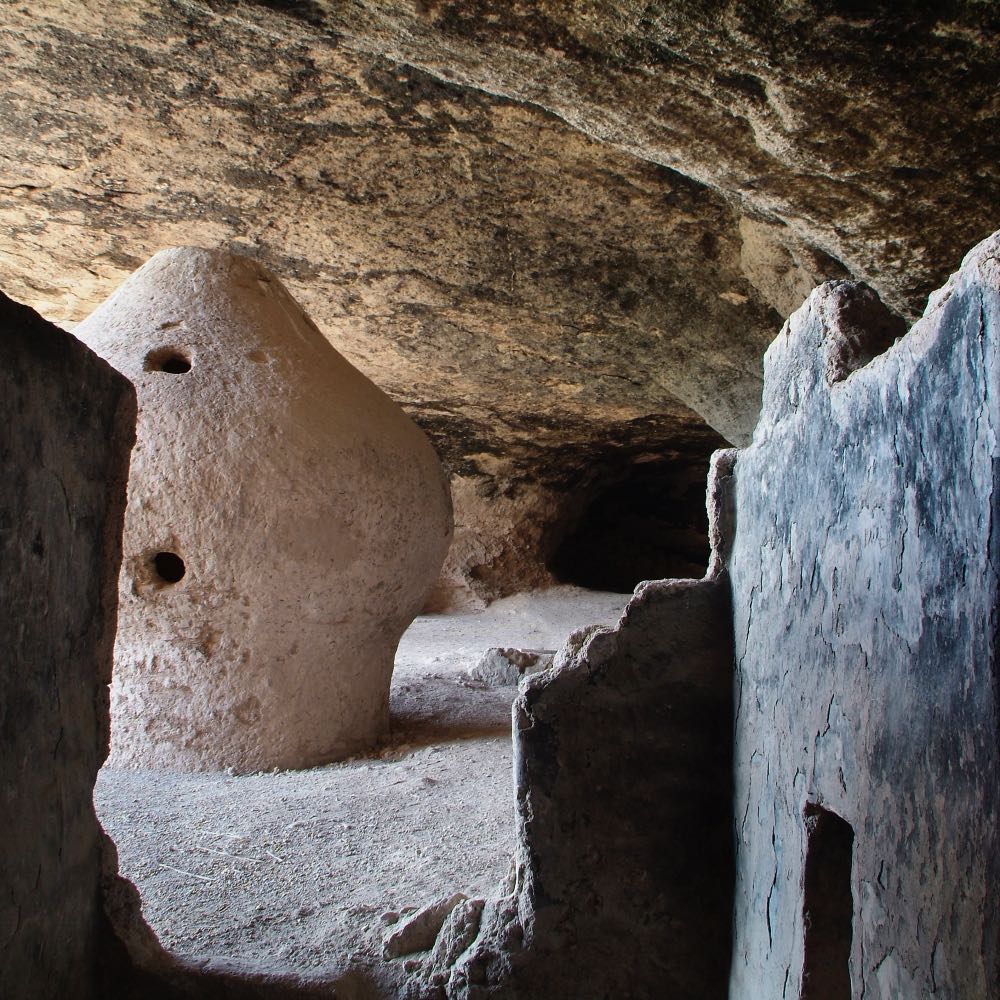
If you have an extra half day, Cueva de la Olla (the Cave of the Pot) is a group of adobe structures inside a cave in the first range of the Sierra Madre, about 30 miles (48 km 30 mi) southwest of Paquimé. It is named for its enormous communal granary in the shape of a cooking pot, built of twisted dry leaves covered in clay and still remarkably preserved. Entry is free, and it is open Tuesday to Sunday from 9:00 to 17:00, with last entry at 15:00. Access is from kilometer 60 of the road from Casas Grandes toward Mesa del Huracán, then the turn for Rancho Casa Blanca. It is a remote rural road, so the daylight-only advice above applies twice.
Other trips in the state, off the train line: our hub of Chihuahua beyond the train, the Samalayuca dunes on the way to Ciudad Juárez, Basaseachi Falls, Namúrachi canyon and the Mennonites of Cuauhtémoc. If you are heading on to the canyon itself, start with Chihuahua to Creel and our guide to the Copper Canyon train.
Printable checklist
Tick the boxes on screen, or print each list on its own sheet.
Before you go
In your bag
Frequently asked questions
Is Paquimé open on Mondays?
No. The archaeological zone and the Museum of the Cultures of the North open Tuesday to Sunday from 9:00 to 17:00, and the last entry to the zone is at 16:00.
How much does it cost to visit Paquimé?
Foreign visitors pay MXN 210, and Mexican nationals MXN 105. One ticket covers the archaeological site and the museum. Professional cameras pay an extra fee.
How far is Paquimé from Chihuahua city and from El Paso?
By road, about 296 km 184 mi from Chihuahua city and 290 km 180 mi from the Paso del Norte bridge in Ciudad Juárez, roughly 4 hours 15 minutes of driving from either. Mata Ortiz is 29 km 18 mi, about 40 minutes, beyond the ruins.
Can I visit Paquimé and Mata Ortiz in one day?
Yes, with a guided tour from Chihuahua city that includes both, but expect a very long day: the drive alone is more than eight hours round trip. Two days with a night in Nuevo Casas Grandes is more relaxed and keeps your driving in daylight.
Is it safe to drive to Paquimé from the U.S. border?
The U.S. lists the state of Chihuahua at Level 3, Reconsider travel, and restricts its employees from driving between Mexican border cities and the interior. The UK and Canada advise against non-essential travel to this part of Chihuahua. If you go, travel in daylight, use toll roads where possible and consider a guided tour.
Who was Juan Quezada?
The potter from Mata Ortiz who, starting in the 1970s, taught himself to reproduce the ancient pottery of Paquimé and shared the technique with his village. He received Mexico's National Prize for Arts and Sciences in 1999 and died on December 1, 2022.
Recommended hotels
Recommended tours
Send me this guide
Everything on this page in your inbox: the schedules and the booking links. Handy for planning, printing or reading on the train.
Sources
- UNESCO World Heritage Centre: Archaeological Zone of Paquimé, Casas Grandes
- INAH: Paquimé, visitor information and main structures
- INAH: Museum of the Cultures of the North
- INAH Chihuahua: Paquimé
- INAH: Cueva de la Olla, visitor information
- INAH: Cueva de la Olla, the site
- Secretaría de Cultura, Sistema de Información Cultural: Paquimé
- Secretaría de Cultura, Sistema de Información Cultural: Mata Ortiz pottery
- Secretaría de Turismo: Casas Grandes, Chihuahua
- Secretaría de Turismo: the pottery of Mata Ortiz
- Secretaría de Educación Pública: Juan Quezada Celado, National Prize for Arts and Sciences
- Government of Chihuahua: Gawí Tónara award to Juan Quezada (2021)
- New Mexico State University Art Museum: Mata Ortiz, highlights from the Lysbeth Warren Anderson collection
- Tiempo: death of Juan Quezada Celado (2022)
- Servicio Meteorológico Nacional: climate normals for Nuevo Casas Grandes, station 8210 (1971–2000)
- U.S. Customs and Border Protection: Columbus, New Mexico port of entry
- U.S. Department of State: Mexico travel advisory
- UK Foreign, Commonwealth & Development Office: Mexico travel advice
- Government of Canada: Mexico travel advice
- OpenStreetMap: road and track data (© OpenStreetMap contributors, ODbL)