
Planning your trip
Chihuahua Beyond the Train: 5 Day Trips and the Multi-Day Tours Compared
Five escapes off the Chepe line, from Basaseachi Falls to Paquimé, with real road times from Chihuahua city, and the multi-day tours side by side.
Saved on this device: you can read this guide without signal.
Email me this guide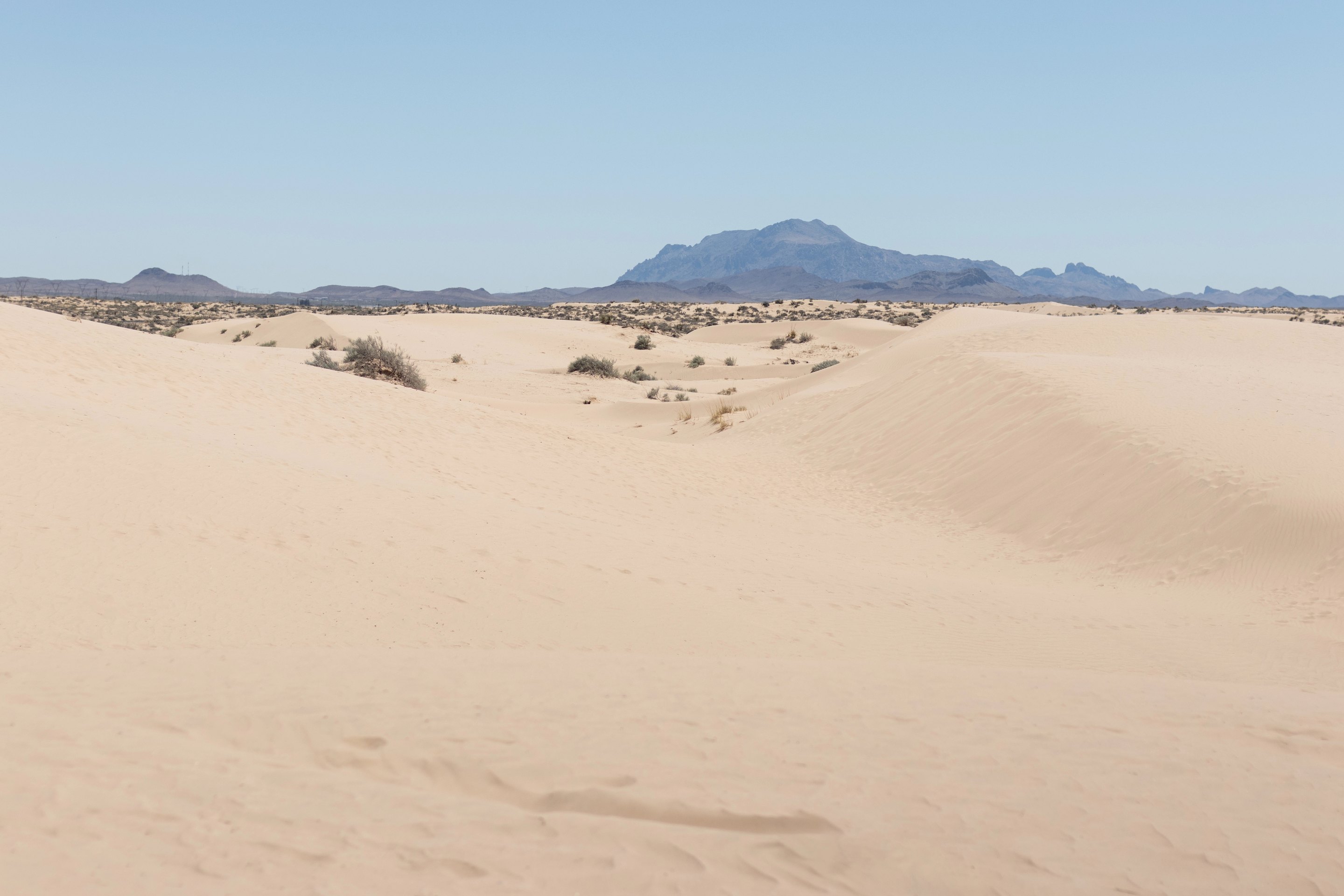
The Chepe line is only one strip of a very large state. Five of Chihuahua's best sights are off the tracks: a 246 m 807 ft waterfall, a World Heritage pre-Hispanic city, Mennonite farm country, white sand dunes and a slot canyon you walk through.
This page puts them side by side so you can decide which ones fit your trip, how far each one really is by road, and whether a guided multi-day tour already includes it. Each escape has its own full guide; this is where you choose.
If you would rather not drive, every one of the five has a guided day trip from Chihuahua city on Civitatis, with pickup at your hotel. The Paquimé & Mata Ortiz Day Trip and the Basaseachic Falls National Park Excursion are the two that save you the most driving. The others are in the table below.
The five escapes at a glance
Distances and times are by road from the center of Chihuahua city, without stops. Real driving days run longer: add fuel, meals, road works and slower traffic in towns.
| Escape | Road distance from Chihuahua city | Driving time, one way | Best for | Time to allow | Guided day trip from Chihuahua |
|---|---|---|---|---|---|
| Basaseachi Falls | 280 km 174 mi | about 4 h | Nature lovers, walkers, photographers | A full day; easier from Creel | Basaseachic Falls National Park Excursion, 8 hours |
| Paquimé and Mata Ortiz | 296 km 184 mi to Paquimé; Mata Ortiz is 29 km 18 mi farther | about 4 h 15 min, plus 40 min to Mata Ortiz | Archaeology, pottery, history | A very long day, or better, two days with a night in Nuevo Casas Grandes | Paquimé & Mata Ortiz Day Trip, 8 hours |
| Mennonites of Cuauhtémoc | 119 km 74 mi to the Mennonite museum | about 1 h 35 min | Food, culture, an easy outing | Half a day, or a stop on the way to Creel | Cuauhtemoc Mennonite Fields Tour, 5 hours |
| Samalayuca Dunes | 318 km 198 mi; only 48 km 30 mi from Ciudad Juárez | about 4 h 15 min; 45 min from Ciudad Juárez | Desert scenery, sandboarding, travelers arriving from El Paso | A full day from Chihuahua; half a day from the border | Samalayuca Dunes Sandboarding Tour, 8 hours |
| Namúrachi Canyon | 130 km 81 mi | about 2 h 15 min | A short walk through a narrow canyon, a mission village | A full day | Namúrachi Canyon Day Trip, 7 hours |
How we measured. The distances are road routes we calculated from the center of Chihuahua city to the waterfall viewpoint, the parking lot of Paquimé, the village of Mata Ortiz, the Mennonite museum on the road north of Cuauhtémoc, the village of Samalayuca at the edge of the dunes and the canyon on the San Francisco de Borja to Nonoava road. Routing engines tend to be optimistic in the mountains, so treat each time as the minimum.
Two things stand out in that table. First, three of the five are about four hours away, so "a day trip from Chihuahua" means eight hours or more in a vehicle for Basaseachi, Paquimé and Samalayuca. Second, the closest two, Cuauhtémoc and Namúrachi, are the only ones that leave real time on the ground in a single day.
The five, one by one
Basaseachi Falls: Mexico's highest permanent waterfall
The Basaseachi River drops 246 m 807 ft into the Candameña canyon, the highest waterfall in Mexico that runs all year. In the same park, Piedra Volada falls 453 m 1,486 ft, but only in the rainy season. The area has been a national park since 1981 and covers about 5,803 hectares (14,339 acres) of forest and canyon in the municipality of Ocampo.
From Chihuahua city it is about four hours each way, which is why it pairs better with Creel: from Creel it is 130 km 81 mi, about 2 h 40 min. The guided excursion from Chihuahua leaves your hotel at 8 am and is back around 4 pm; with four hours of driving each way on our estimate, ask the operator how much time you get at the viewpoints before you book. Lunch is free time at a restaurant nearby, not included.
Read the full guide: Basaseachi Falls.
Paquimé and Mata Ortiz: the ancient city and the potters
Paquimé, on the edge of the town of Casas Grandes, is a UNESCO World Heritage site: a pre-Hispanic city that grew between the years 700 and 1475, peaked in the 14th and 15th centuries and was a center of trade and cultural exchange between the peoples of the north and the south. The ticket also covers the Museum of Northern Cultures next to it. Opening hours are Tuesday to Sunday, 9:00 to 17:00, last entry 16:00, and foreign visitors pay MXN 210 (about US$12 at 17.5 pesos to the dollar). Food is not allowed inside and professional cameras pay an extra fee.
Mata Ortiz, about 40 minutes south by road, is the village of potters whose work revived the techniques of the ancient Paquimé ceramics; its fame began with the self-taught potter Juan Quezada. The guided day trip includes a guided visit of the museum and the site, a pottery demonstration in Mata Ortiz and a traditional meal there.
At four hours and a quarter each way, this is the escape that most rewards a night away. Nuevo Casas Grandes, a few kilometres from the site, has the hotels. Read the full guide: Paquimé and Mata Ortiz.
The Mennonites of Cuauhtémoc: cheese, farms and a museum
The Mennonite communities around Ciudad Cuauhtémoc settled here more than a hundred years ago, when the Mexican government allowed them to enter as permanent residents without doing military service. Visitors come for their cheese, salami, jam, bread and cookies, and for the Mennonite Cultural Center and Museum on the corridor north of the city.

It is the easiest of the five: about an hour and a half by road, and Cuauhtémoc is on the highway from Chihuahua to Creel, so it fits on the way to the canyon. The guided tour picks you up at 9 am and returns at 2 pm, with the museum and a tasting of Mennonite cheese and sausage. On the multi-day tours that stop here, the community visit is replaced by lunch at a Mennonite restaurant on Sundays.
Read the full guide: the Mennonites of Cuauhtémoc.
Samalayuca Dunes: white sand on the way from the border
The dunes of Samalayuca are a field of fine white silica sand about 50 km 31 mi south of Ciudad Juárez, crossed by Federal Highway 45 and the railway. Since June 5, 2009 they have been a federal flora and fauna protection area.
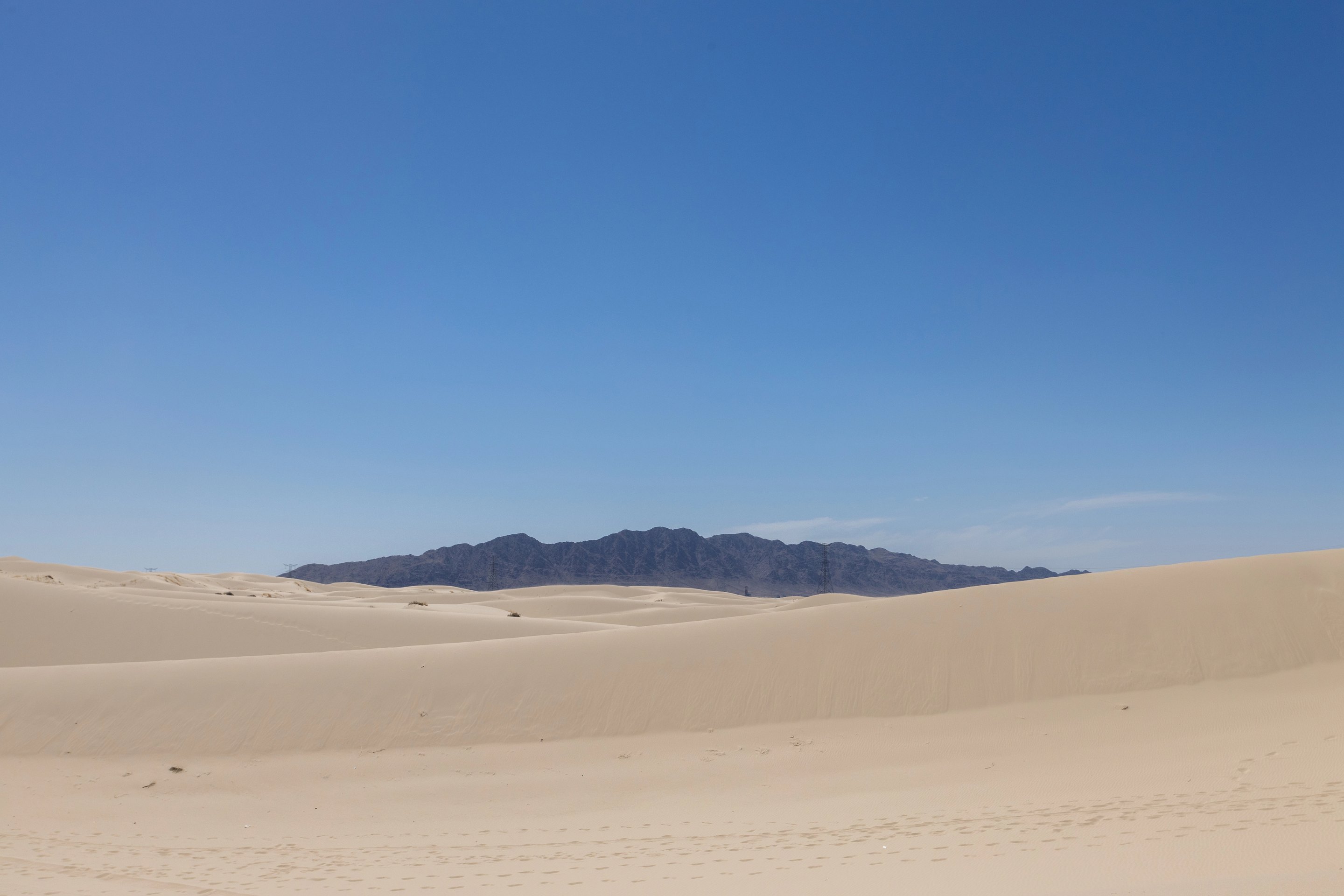
For a traveler starting in Chihuahua city they are a long day: about 4 h 15 min each way. For a traveler driving in from El Paso, they are 45 minutes south of the border and almost on the way. The guided tour from Chihuahua includes the boards and instruction for two to three hours of sandboarding, then burritos in Samalayuca before the drive back; it lasts about 8 hours.
Read the full guide: Samalayuca Dunes.
Namúrachi Canyon: a walk inside the rock
Namúrachi is a narrow canyon on the road from San Francisco de Borja to Nonoava, southwest of Chihuahua city. The day trip walks you through the gorge to a natural altar inside it, a space used now and then for religious ceremonies and music because of the way it carries sound. On the way it stops at San Francisco de Borja, a village founded in the mission era, to see its 18th-century church, and on the way back there is an hour for lunch in Santa Isabel.
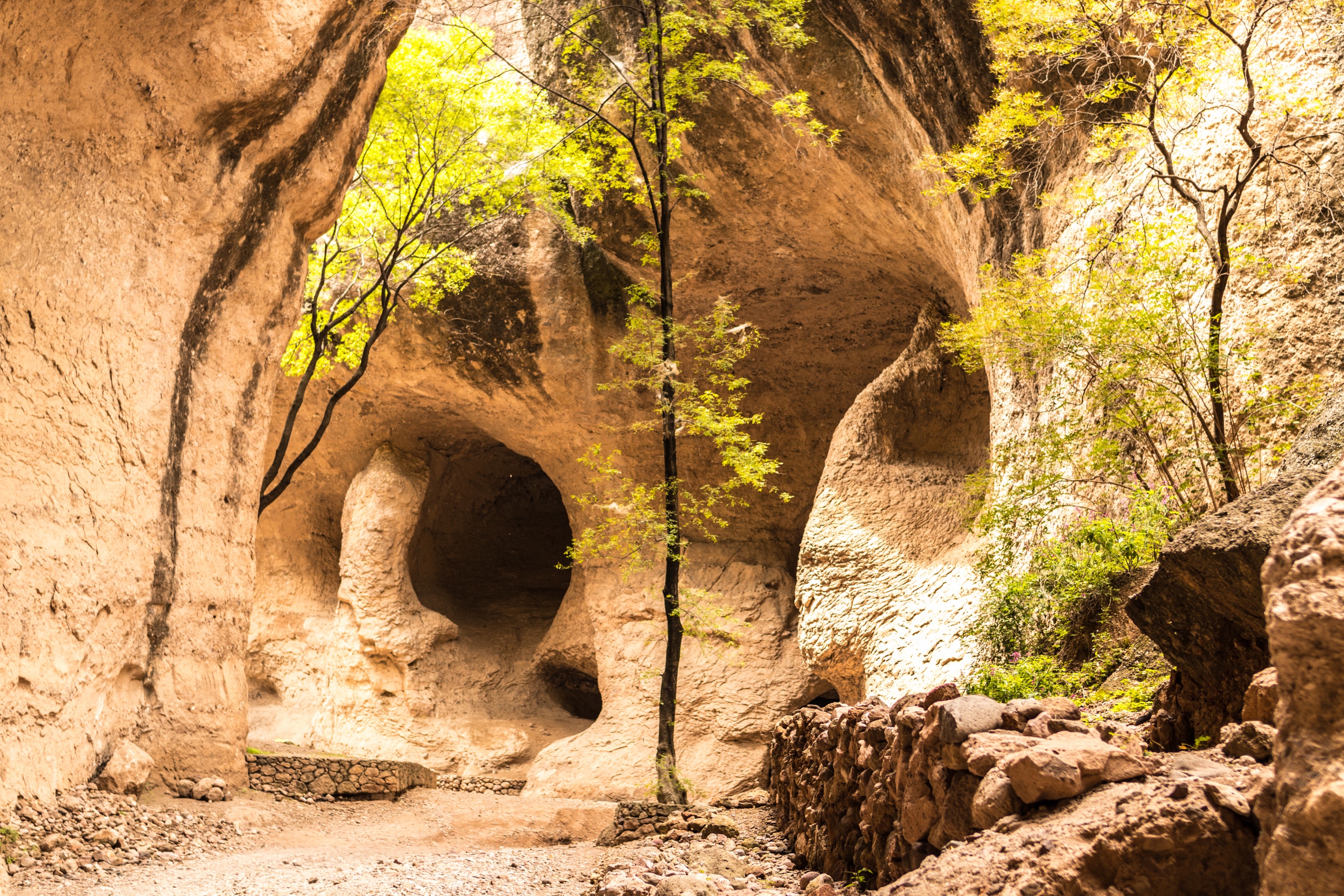
At 130 km 81 mi, about 2 h 15 min, it is the second closest of the five, and at about US$79 per person it is the least expensive guided day trip on this page.
Read the full guide: Namúrachi Canyon.
Closer to the city, and deeper into the canyon
Two more ideas if your time is short or your trip is long. Chihuahua city itself deserves a day: the 7-day tour below spends its first afternoon on a guided walk to Quinta Gameros, the cathedral, the Pancho Villa museum in the revolutionary's former home and the cell where Miguel Hidalgo was held in 1811; our guide to things to do in Chihuahua has the rest. And Cumbres de Majalca, one of the state's protected natural areas, is only 63 km 39 mi northwest of the city, about 1 h 15 min by road, for a mountain half day without a long drive. Near the border, Peguis Canyon, where the Conchos River cuts through the range west of Ojinaga, is the natural add-on to a Big Bend trip.
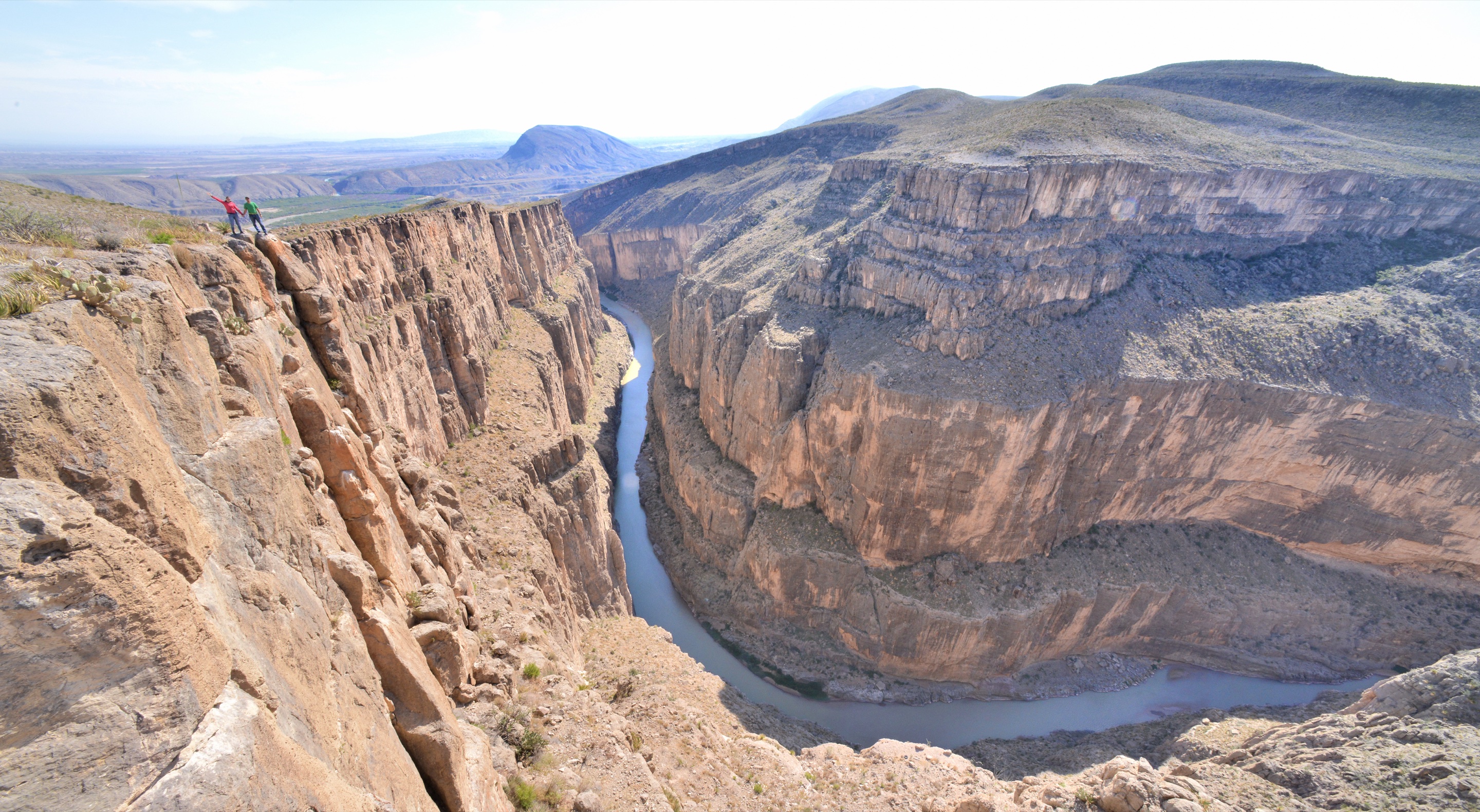
At the other end of the scale, Batopilas and Urique, the old towns at the bottom of the canyons, are reached by road from Creel and from Bahuichivo. They are beyond the scope of this page and of every tour on it; we have not yet confirmed those roads with official data, so we give no times for them.
The guided day trips side by side
Every tour below starts in Chihuahua city. Prices are per person, the lowest each listing shows, and they change; confirm the current price before you book.
| Day trip | Length | Pickup and return | What is included | Free cancellation | Price per person |
|---|---|---|---|---|---|
| Basaseachic Falls National Park Excursion | 8 hours | 8 am at your hotel, back about 4 pm | Transport to the park and time at the viewpoints; lunch on your own | Up to 24 hours before | about US$232 |
| Paquimé & Mata Ortiz Day Trip | about 8 hours | At your hotel | Guided visit of the museum and the site, pottery demonstration, traditional meal in Mata Ortiz | Up to 24 hours before | about US$281 |
| Cuauhtemoc Mennonite Fields Tour | 5 hours | 9 am at your hotel, back about 2 pm | The fields, the Mennonite Museum, a cheese and sausage tasting | Up to 24 hours before | about US$153 |
| Samalayuca Dunes Sandboarding Tour | 8 hours | At your accommodation | Sandboarding gear and instruction, 2 to 3 hours on the dunes, burritos in Samalayuca | Up to 48 hours before | about US$176 |
| Namúrachi Canyon Day Trip | 7 hours | At your hotel | San Francisco de Borja church, the canyon walk, an hour for lunch in Santa Isabel | Up to 48 hours before | about US$79 |
The Basaseachi, Paquimé and Samalayuca tours each spend around eight hours of the day on the road if our route estimates hold. They are good value if you do not want to drive mountain or desert highways yourself; they are a poor fit if you want a long, slow afternoon at the destination.
The five multi-day tours from Chihuahua, compared
If you would rather book the whole trip as one package, Civitatis sells five guided tours of several days that start in Chihuahua city. All of them include hotels, transfers and at least one ride on the Chepe Express. Here is what each one really covers.
| Tour | Days and nights | From → to | Train | Nights | Escapes off the line | Cancellation | Price per person |
|---|---|---|---|---|---|---|---|
| Chepe Express 3-Day Tour: Creel & Copper Canyon | 3 days, 2 nights | Chihuahua → Chihuahua (back at your hotel about 3 pm on day 3) | Chepe Express, Creel to Divisadero | Creel 1 · Divisadero 1 | Mennonite community of Cuauhtémoc | 70 % refund up to 48 hours before | from about US$529 |
| Chihuahua & El Fuerte 4-Day Tour | 4 days, 3 nights | Chihuahua → Los Mochis (hotel or airport, about 3 pm) | Chepe Express, Divisadero to El Fuerte | Creel 1 · Divisadero 1 · El Fuerte 1 | Mennonite community of Cuauhtémoc | 70 % refund up to 48 hours before; train tickets cannot be refunded or changed | from about US$427 |
| Chepe Express 5 Day Tour: Chihuahua & El Fuerte | 5 days, 4 nights | Chihuahua → Los Mochis airport | Train to Creel (see the note below), then Chepe Express Creel to Divisadero and Divisadero to El Fuerte | Creel 1 · Divisadero 2 · El Fuerte 1 | None | 70 % refund up to 48 hours before; train tickets cannot be refunded or changed | from about US$1,356 |
| 7-Day Northern Mexico Tour + Chepe Train | 7 days, 6 nights | Chihuahua airport → Los Mochis airport | Chepe Express in first class, Divisadero to El Fuerte | Chihuahua 1 · Creel 3 · Divisadero 1 · El Fuerte 1 | Mennonites of Cuauhtémoc and Basaseachi Falls | 70 % refund up to 48 hours before | about US$2,030 |
| 11-Day Northern Mexico Tour: Chihuahua to El Fuerte + Chepe Express | 11 days, 10 nights | Chihuahua airport → Los Mochis airport | Chepe Express, Divisadero to El Fuerte | Chihuahua 2 · Creel 4 · Divisadero 2 · El Fuerte 2 | Samalayuca Dunes and the Mennonites of Cuauhtémoc | 70 % refund up to 48 hours before | about US$2,938 |
Prices are per person and change; confirm the current price before you book. "Or similar" applies to every hotel these tours name, and none of the five includes Paquimé or Namúrachi.
What the two long tours add. The 7-day tour spends day 2 driving from Chihuahua to Creel through Cuauhtémoc, with the Mennonite Museum and a cookie house, and then the Basaseachi Falls national park; it adds a Chihuahua city tour on day 1, three nights in Creel with a day for the valleys, the San Sebastián cave, Cusárare waterfall and Lake Arareco, a spa afternoon, and a day of canyon viewpoints and the adventure park before the train. The 11-day tour adds a round trip from Chihuahua to the Samalayuca dunes for sandboarding on day 2, the Mennonites on the way to Creel on day 3, four nights in Creel, a day to Cerocahui by way of the Cerro del Gallego viewpoint, an 18 km 11 mi guided hike from Divisadero with a cable car ride, and a boat trip to the petroglyphs on the Fuerte River.
A note on the 5-day tour. Its listing says you board the Chepe Express in Chihuahua for Creel on day 1. The Express does not run from Chihuahua city: it runs between Los Mochis and Creel. The only train from Chihuahua is the Chepe Regional, which leaves for the coast on Tuesdays and Saturdays only. Ask the operator in writing which train, or which vehicle, takes you to Creel on day 1.
Which days these tours can start
The tours ride the Chepe Express on fixed days, so they cannot start on any day you like. The Express leaves Creel and Divisadero toward the coast on Tuesdays, Fridays and Sundays, and in May, June, August and September it runs only from Thursday to Sunday. Reading each itinerary against that timetable, these are the start days that work; the operator sets the real departure days, so confirm yours before you pay.
| Tour | The train day in the itinerary | Start days that fit, most months | Start days that fit in May, June, August and September |
|---|---|---|---|
| 3 days | Day 2, Creel to Divisadero | Monday, Thursday or Saturday | Thursday or Saturday |
| 4 days | Day 3, Divisadero to El Fuerte | Wednesday, Friday or Sunday | Wednesday or Friday |
| 5 days | Days 2 and 4, Creel to Divisadero and Divisadero to El Fuerte | Thursday or Saturday | Thursday |
| 7 days | Day 6, Divisadero to El Fuerte | Sunday, Tuesday or Thursday | Sunday or Tuesday |
| 11 days | Day 9, Divisadero to El Fuerte | Monday, Thursday or Saturday | Thursday or Saturday |
Which one to choose
- If you have 3 days and want to fly home from Chihuahua: the 3-day tour is the only one that ends where it starts. It is one train ride (Creel to Divisadero) plus a long road day back, and it stays in Chihuahua state the whole time.
- If you have 4 days and want to end on the coast: the 4-day tour is the least expensive of the five and finishes in Los Mochis. It drives to Divisadero and rides the train from there to El Fuerte, so you do not ride between Creel and Divisadero.
- If you want time on the canyon rim: the 5-day tour has two nights at Divisadero.
- If you want Basaseachi Falls too: the 7-day tour is the only package that includes it, with the Mennonites on the same day.
- If you want the dunes: the 11-day tour is the only one with Samalayuca.
- If you want Paquimé too: none of the packages goes there. Spend two days on it before or after the tour: drive or take the guided day trip from Chihuahua, or better, sleep a night in Nuevo Casas Grandes.
- If you want Namúrachi: add the guided day trip on the day before your tour starts.
Two things to ask before you pay. Several reviews on these listings mention pickup times confirmed late and hotels swapped for a "similar" one; ask for the pickup time and the hotel names in writing. And because train tickets cannot be refunded, price trip-cancellation cover before you book (we compare the options in travel insurance for Mexico).
How to combine an escape with the train on your own
If you are building the trip yourself, start from our 3-, 5- and 7-day train itineraries and fit the escapes around them. The rule that matters: the Chepe Express never reaches Chihuahua city, so the day you drive between Chihuahua and Creel is the day that can carry an escape.
| Escape | Where it fits in a train itinerary | What it costs you |
|---|---|---|
| Mennonites of Cuauhtémoc | On the road day between Chihuahua and Creel (day 1 of the 3-day plan from the sierra, day 2 of the 7-day plan from the sierra, or the last day of the plans from the coast) | The museum is a detour north of Cuauhtémoc: about 280 km 174 mi and 4 h 06 min of driving instead of 260 km 162 mi and 3 h 47 min, plus the visit |
| Basaseachi Falls | As a day trip from Creel, on the free Creel day of the 5- or 7-day plans | 130 km 81 mi and about 2 h 40 min each way from Creel |
| Namúrachi Canyon | A day in Chihuahua city before or after the train, such as the arrival day of the 7-day plan from the sierra | One extra day in Chihuahua |
| Paquimé and Mata Ortiz | Two days in Chihuahua state before you head for Creel, or after you come back | Two extra days and a night in Nuevo Casas Grandes |
| Samalayuca Dunes | On the drive from El Paso and Ciudad Juárez to Chihuahua, before you start the train itinerary | Half a day; it is a full day as a return trip from Chihuahua |
Prefer the train all the way from Chihuahua? The Chepe Regional leaves Chihuahua on Tuesdays and Saturdays and calls at Creel; it is sold by phone at 800 122 4373 or at a ticket office, not online. Then the road escapes have to fit on the days in Chihuahua before you board. Our guide Chihuahua to Creel compares the train, the bus, a private driver and the car, and driving to Copper Canyon covers the roads, tolls and fuel.
Where to sleep. Chihuahua city is the base for four of the five day trips, and Nuevo Casas Grandes for Paquimé: hotels in Chihuahua and hotels in Nuevo Casas Grandes on Booking.com. For the city itself, see things to do in Chihuahua; for the canyon end, things to do in Creel.
When to go and how to get there
Seasons. In the sierra, around Creel and Basaseachi, the rains fall mainly from July to September; that is when Piedra Volada, the seasonal waterfall at Basaseachi, runs. For the canyon end of the trip, October and November, then March and April, are dry and mild by day; our guide to the best time to visit has the month-by-month detail. The Samalayuca dunes are open desert, so start early and carry water whatever the month.
Getting to Chihuahua. You can fly into Chihuahua city, where the 7- and 11-day tours pick you up at the airport, or drive in from El Paso: from Ciudad Juárez it is 368 km 229 mi and about 5 hours to Chihuahua on Highway 45 and toll road 45D, and that road passes the village of Samalayuca on the way. Flights, buses and the border crossing are in our guide to things to do in Chihuahua.
Is it safe to visit these places from the U.S.?
The five escapes are all in the state of Chihuahua, and four of the five multi-day tours end in the state of Sinaloa. Here is what three governments say. This is a summary at state level; each destination guide has its own section.
- United States. The State Department advisory for Mexico issued on May 29, 2026 lists the state of Chihuahua at Level 3, Reconsider travel, due to terrorism, crime and kidnapping, and says U.S. government employees may not travel to certain areas of Chihuahua, including Copper Canyon. The advisory has a map of the areas where its employees may and may not go; read it for each place on your list. Sinaloa, where El Fuerte and Los Mochis are, is at Level 4, Do not travel.
- United Kingdom. The UK government advises against all but essential travel to the state of Chihuahua, except Chihuahua city, the border crossing at Ciudad Juárez by federal toll road 45, toll road 45D between Chihuahua and Ciudad Juárez, the Copper Canyon rail route and the towns on it, including Creel, the road from Creel via San Juanito to San Pedro, and state highway 16 from San Pedro to Chihuahua. None of the five escapes is on that list. Samalayuca sits beside the excepted highway between Chihuahua and Ciudad Juárez, and the excepted road from Creel to Chihuahua passes through Cuauhtémoc, but the dunes and the Mennonite farm camps are off those roads. For Sinaloa, the UK excepts Los Mochis, road 32 between El Fuerte and Los Mochis and the rail route, and notes that armed robbery and vehicle theft have happened in El Fuerte. Along the rail route it advises not to walk alone in the canyon or stray from the tourist trail, and to complete all activities within daylight hours.
- Canada. Canada advises a high degree of caution in Mexico and advises against non-essential travel to the state of Chihuahua, excluding Chihuahua City, and to Sinaloa, excluding Los Mochis and parts of Mazatlán, and only if you arrive there by air or sea.
What that means in practice, without promising anything either way: plan every road leg in daylight, use the toll highways where there is one, go with a guided tour or a driver who knows the route if you are not used to Mexican roads, tell someone your route and your return time, and buy travel insurance that covers the region. Advisories change; read the current versions shortly before you travel. Our full page on safety in the Copper Canyon summarizes the U.S. advisory and health notes.
Before you go: a checklist to print
- Pick your escapes from the first table and count the hours on the road, not the kilometres.
- If you book a multi-day tour, check its start day against the train days above and get the pickup time and hotel names in writing.
- Paquimé closes on Mondays; plan it from Tuesday to Sunday and arrive before 16:00.
- On a Mennonite tour, avoid Sundays if you want the community visit rather than a restaurant lunch.
- Plan every drive in daylight, and fill the tank before you leave the highway.
- Pack for two climates: sun hat, sunscreen, water and closed shoes for the dunes and the canyon trails, warm layers for the sierra, and cash for small towns.
- Read the U.S., UK and Canadian advisories for the state again a week before you travel.
- When to go for the canyon end of the trip: our guide to the best time to visit.
Frequently asked questions
Can you visit Basaseachi Falls on a day trip from Chihuahua city?
Yes, but it is a long day: the falls are about 280 km 174 mi and four hours by road each way. The guided excursion from Chihuahua leaves at 8 am and returns around 4 pm. From Creel the falls are closer, about 130 km 81 mi and 2 h 40 min.
How far is Paquimé from Chihuahua city?
About 296 km 184 mi by road, a little over four hours each way, and Mata Ortiz is 29 km 18 mi farther. Paquimé opens Tuesday to Sunday from 9:00 to 17:00, with last entry at 16:00, and foreign visitors pay MXN 210, museum included.
Which multi-day Chepe tour includes places off the train line?
The 3-day and 4-day tours stop at the Mennonite community of Cuauhtémoc; the 7-day tour adds Basaseachi Falls; the 11-day tour adds the Samalayuca dunes and the Mennonites. None of them includes Paquimé or Namúrachi Canyon.
Is it safe to visit Chihuahua outside the train route?
The U.S. advisory issued on May 29, 2026 lists Chihuahua at Level 3, Reconsider travel. The UK advises against all but essential travel to the state outside Chihuahua city, the rail route, Creel and a few named roads, and none of these five escapes is among its exceptions. Read the current advisories before you decide.
Recommended hotels
Recommended tours
Send me this guide
Everything on this page in your inbox: the schedules and the booking links. Handy for planning, printing or reading on the train.
Sources
- Diario Oficial de la Federación: summary of the management program of the Cascada de Bassaseachic National Park (2016)
- INAH: Paquimé archaeological zone
- INAH: Museum of Northern Cultures
- Visit Chihuahua (state government): Casas Grandes
- Visit Chihuahua (state government): Mata Ortiz
- Visit Chihuahua (state government): local culture
- Government of Chihuahua: Médanos de Samalayuca protection area
- Chepe: Chepe Express schedules
- Chepe: Chepe Regional schedule and fares
- U.S. Department of State: Mexico travel advisory
- UK Foreign, Commonwealth & Development Office: Mexico travel advice
- Government of Canada: Mexico travel advice
- OpenStreetMap: road data (© OpenStreetMap contributors, ODbL)